TechXchange: Phased Arrays and Antenna Design

Whereas antennas were once considered as an RF component whose geometry and electrical characteristics needed to be optimized, they've become thought of more as an integrated part of a wireless system—co-designed with RFICs, beamformers, packaging, mechanical structures, software, simulation tools, and even the communications architecture itself.
In this collection, four major industry trends reveal themselves:
- Phased arrays are moving from specialized defense applications into broader commercial wireless and SATCOM systems.
- Antenna integration and miniaturization are becoming as important as raw RF performance.
- 5G, mmWave, 6G, and non-terrestrial networks (NTNs) are forcing antenna designers to deal with wider bandwidths, higher frequencies, polarization, beam steering and increasingly complex propagation environments.
- AI/GPU-enabled simulation, automated optimization and better measurement workflows are changing the "how" of antenna design into the "why."
Phased Arrays, Beamforming & Advanced Antenna Systems
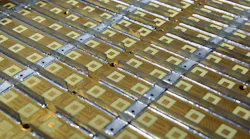
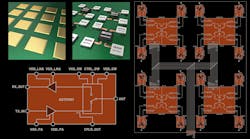
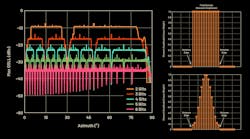
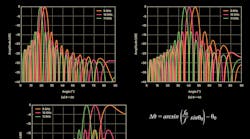
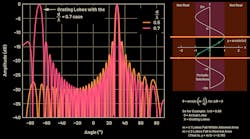
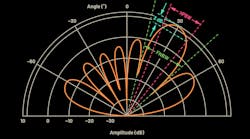
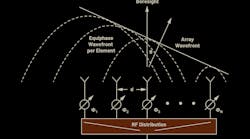
These articles focus on electronically steered arrays, beamforming architectures, antenna-pattern fundamentals, calibration, sidelobe and grating-lobe control, beam squint, and practical implementation of phased arrays in 5G, SATCOM, and other high-performance systems. Together, they trace the evolution from fundamental array theory to highly integrated, multichannel phased-array systems.




Antenna Integration, Miniaturization & Device-Level Design
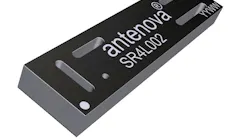
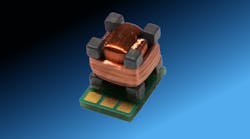
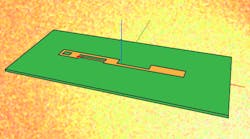
These articles focus on putting increasingly capable antennas into increasingly constrained physical environments. Topics include compact and PCB antennas, transparent antennas, antennas near the human body, 3D structures, antenna-in-package architectures, and integration into IoT, VR/AR, and consumer devices. A common theme is that antenna performance increasingly depends on the entire mechanical, electrical, and materials environment of the product.







5G/6G, mmWave, SATCOM & Emerging Wireless Applications
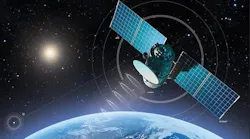
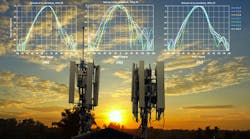
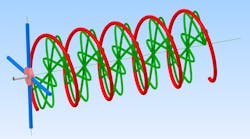
These articles examine how changing wireless architectures are driving new antenna requirements. The transition to mmWave and 5G, the emergence of 6G and non-terrestrial networks, UWB, satellite communications, and increasingly demanding RF front ends are creating new requirements for antenna bandwidth, polarization, efficiency, beam steering, and system integration. These articles are particularly useful for understanding why antenna technology is changing as wireless architectures evolve.





Antenna Design, Measurement, Simulation & Optimization
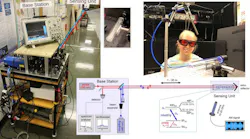
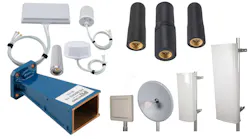
These articles address the engineering workflow behind successful antenna development: selecting an antenna, modeling and simulating it, measuring performance, diagnosing interference, and optimizing it for the final application. The collection points toward increasingly computational and automated antenna development, with GPU-based simulation and online optimization tools complementing traditional RF measurement techniques such as VNAs.