ESA Observes Earth with Teledyne’s Satellite Detectors

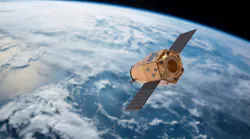
The European Space Agency (ESA) increased its climate-monitoring capabilities from space with sensor technology from Teledyne Space Imaging of Teledyne Technologies Inc. Multiple sensors were incorporated into two Earth observation satellites, ESA’s Sentinel-3C and Fluorescence Explorer (FLEX) missions, which will study Earth’s oceans, land surfaces, and vegetation trends. The satellites were launched together aboard a Vega C rocket from Europe’s Spaceport in French Guiana.
Sentinel-3C, the third satellite in the Sentinel-3 series, was designed and developed by ESA and is operated by EUMETSAT. Sentinel-3A was launched in 2016 and Sentinel-3B in 2018. The Sentinel missions are part of the Copernicus Earth observation campaign of the European Union’s (EU’s) Space Program.
Sentinel-3C employs five Teledyne CCD55-20 detectors for its Ocean and Land Color Instrument (OLCI) system. The back-illuminated detectors are frame-transfer, charge-coupled devices (CCDs) optimized for hyperspectral imaging in the spectrum range of visible to near-infrared (NIR) light from 0.4 to 1.04 µm, useful for recording ocean color and other environmental conditions (see image above).
Elinor Mitchell, Product Engineering Team Leader of CCD55-20 at Teledyne Space Imaging, said, “We’re delighted to see the successful launch of Sentinel-3C, and our imaging technology continuing to play a vital role in helping support ocean forecasting systems, environmental monitoring, and observing changes in atmospheric composition.”
The FLEX satellite launched with three CCD325 detectors for the satellite’s Fluorescence Imaging Spectrometer (FLORIS), operating in the spectral range from 0.50 to 0.78 µm. The imaging sensors are designed to detect fluorescent signals from plants during photosynthesis. The fluorescence measurements provide insights into a plant’s photosynthetic efficiency and amount of CO2 consumed during photosynthesis.
Tracy Phillips, Principal CCD325 Project Manager at Teledyne Space Imaging, explained how CCD325 sensors help photosynthetic testing on FLEX. “Seeing FLEX successfully launch is an exciting moment for our team and everyone who has contributed to the mission. FLEX will give scientists a new way to observe the process of photosynthesis and understand the movement of carbon dioxide between plants and our atmosphere.”
Learn more about imaging technologies
 desept113_promo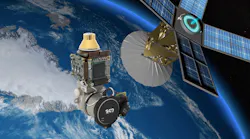
About the Author
Jack Browne
Technical Contributor
Jack Browne, Technical Contributor, has worked in technical publishing for over 30 years. He managed the content and production of three technical journals while at the American Institute of Physics, including Medical Physics and the Journal of Vacuum Science & Technology. He has been a Publisher and Editor for Penton Media, started the firm’s Wireless Symposium & Exhibition trade show in 1993, and currently serves as Technical Contributor for that company's Microwaves & RF magazine. Browne, who holds a BS in Mathematics from City College of New York and BA degrees in English and Philosophy from Fordham University, is a member of the IEEE.