DoW Chooses Stellant's TWTAs for Space Applications
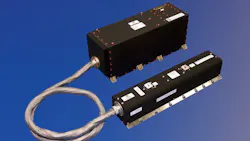
The U.S. Department of War (DoW) recently invested $11.4 million in Defense Production Act (DPA) Title III funds to Stellant Systems Inc. to increase capabilities in, and production of, traveling-wave-tube amplifiers (TWTAs) for space.
Since the start of fiscal year 2026, this is one of seven DPA Title III investments totaling $121.1 million made by the Warfighting Investments, Resourcing, and Executions (WIRE) directorate. Stellant Systems, which is well-versed in klystrons, TWTs, and solid-state amplifiers, will apply to funds according to executive order 14369 to ensure American space superiority.
Regarding this investment in high-power, high-frequency electron tube technology (see image above), the Honorable Michael Cadenazzi, Assistant Secretary of War for Industrial Base Policy, noted, “This manufacturing capability is essential to support existing and future DoW and commercial needs for TWTAs.”
About the impact of the investment upon systems in space, he added, “This will greatly reduce schedule, cost, and performance risks to U.S. government satellite programs.”
The funds will enhance the manufacturability of a modernized dual digital electronic power conditioner and fuel pilot production and qualification of a space-based TWTA for the 71- to 76-GHz satellite-communications (satcom) downlink band.
Learn more about space-borne systems

About the Author
Jack Browne
Technical Contributor
Jack Browne, Technical Contributor, has worked in technical publishing for over 30 years. He managed the content and production of three technical journals while at the American Institute of Physics, including Medical Physics and the Journal of Vacuum Science & Technology. He has been a Publisher and Editor for Penton Media, started the firm’s Wireless Symposium & Exhibition trade show in 1993, and currently serves as Technical Contributor for that company's Microwaves & RF magazine. Browne, who holds a BS in Mathematics from City College of New York and BA degrees in English and Philosophy from Fordham University, is a member of the IEEE.