RF-Detection Satellites Sniff Out Multi-Domain Signals

French satellite supplier Unseenlabs increased its space-based RF detection capabilities with the deployment of its second generation (Gen 2) of satellites. The firm expanded what was maritime-focused RF signal detection to multi-domain detection across maritime, terrestrial, and space environments. The enhanced RF detection capabilities provide usable data and intelligence to customers worldwide.
The first Gen 2 satellte, BRO-31, was integrated by German systems integrator Exolaunch GmbH. It launched aboard SpaceX’s Falcon 9 as part of the Transporter-17 rideshare mission from Vandenberg Space Force Base in California.
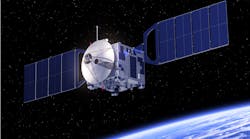
The second-generation satellite continues to rely on the use of monosatellite designs, in which each satellite operates independently, but moves from earlier satellites weighing about 15 kg to the latest much larger systems at about 150 kg (see image above).
Clément Galic, co-founder and CEO of Unseenlabs, said, “Our second-generation satellites significantly expand both the breadth and depth of our RF detection capabilities.”
In describing the expanded capabilities of the new satellites, he added, “This unlocks detection, geolocation, and characterization of a broader range of activities across maritime, land, and space domains. This opens new strategic use cases while reinforcing our ability to support our customers across commercial, security, and defense markets.”
Unseenlabs was founded in 2015 and now operates 23 satellites. The Gen 2 satellites add applications by expanding bandwidth, to L-, S-, C-, X-, and Ku-band frequencies, enabling dual-use operation for civilian and defense systems monitoring.
Learn more about satellite technologies

 Deoct5 1 Promo
 Fig. 1
About the Author
Jack Browne
Technical Contributor
Jack Browne, Technical Contributor, has worked in technical publishing for over 30 years. He managed the content and production of three technical journals while at the American Institute of Physics, including Medical Physics and the Journal of Vacuum Science & Technology. He has been a Publisher and Editor for Penton Media, started the firm’s Wireless Symposium & Exhibition trade show in 1993, and currently serves as Technical Contributor for that company's Microwaves & RF magazine. Browne, who holds a BS in Mathematics from City College of New York and BA degrees in English and Philosophy from Fordham University, is a member of the IEEE.