Wi-Fi 6E Lens Antenna Reduces Antenna Count, Boosts Capacity in Large Venues

The latest in MatSing’s lineup of high-capacity Wi-Fi antennas, the MS-16.16W45, uses a single lens to deliver multiple high-capacity sectors. The antenna extends the same centralized, high-performance approach to Wi-Fi 6E (5.125 to 7.125 GHz) as it has previously in other bands.
The MS-16.16W45 W-iFi antenna supports 16 independent beams and 4×4 MIMO operation in the Wi-Fi 6E band. Thus, it supports thousands of simultaneous users from a single mount point.
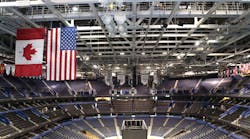
Designed for high-density venues such as stadiums and arenas, the new antenna delivers powerful Wi-Fi 6E performance with significantly fewer antennas, helping venues reduce infrastructure while increasing capacity.
Unlike traditional panel antennas that rely on dozens of distributed mounting locations, MatSing’s centralized lens antenna design provides broad, high-performance coverage from fewer positions. This results in cleaner stadium aesthetics, improved fan experience, and lower long-term operational costs.
MatSing will unveil the MS-16.16W45 antenna at the upcoming Mobile World Congress in Barcelona (March 2 to 5 at Fira Gran Via).
Learn more about lens antennas and Wi-Fi-6E


About the Author
 David Maliniak
David Maliniak
Executive Editor, Microwaves & RF
I am Executive Editor of Microwaves & RF, an all-digital publication that broadly covers all aspects of wireless communications. More particularly, we're keeping a close eye on technologies in the consumer-oriented 5G, 6G, IoT, M2M, and V2X markets, in which much of the wireless market's growth will occur in this decade and beyond. I work with a great team of editors to provide engineers, developers, and technical managers with interesting and useful articles and videos on a regular basis. Check out our free newsletters to see the latest content.
You can send press releases for new products for possible coverage on the website. I am also interested in receiving contributed articles for publishing on our website. Use our contributor's packet, in which you'll find an article template and lots more useful information on how to properly prepare content for us, and send to me along with a signed release form.
About me:
In his long career in the B2B electronics-industry media, David Maliniak has held editorial roles as both generalist and specialist. As Components Editor and, later, as Editor in Chief of EE Product News, David gained breadth of experience in covering the industry at large. In serving as EDA/Test and Measurement Technology Editor at Electronic Design, he developed deep insight into those complex areas of technology. Most recently, David worked in technical marketing communications at Teledyne LeCroy, leaving to rejoin the EOEM B2B publishing world in January 2020. David earned a B.A. in journalism at New York University.