Machine Safety in Industrial Automation Environments
Key Highlights
- High-risk industries face significant hazards from mechanical, electrical, thermal, pneumatic, and chemical energy sources, making safety integration essential.
- Standards like ISO 12100, ISO 13849, IEC 61508, and ISA-84 provide frameworks for hazard analysis, risk reduction, and safety system validation.
- Implementing redundant, fail-safe controls and automated shutdown mechanisms helps prevent accidents caused by design flaws or operator errors.
On March 6, 2026 in Circuit Protection, Industrial Automation, Robotics by Abhishek Jadhav
In high-risk industries, such as manufacturing, energy, and mining, machines often concentrate immense mechanical, electrical, thermal, pneumatic, or chemical energy sources. A minor design flaw, software bug, or operator error can cascade into catastrophic consequences.
According to the National Safety Council, in the United States alone, over 4 million medically consulted work injuries and 4,500+ fatalities were recorded in 2023.[1] These statistics underscore why machine safety is non-negotiable in any automation environment. It is now a core value and design principle that must be built into every process and system.
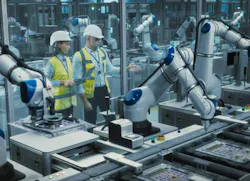
From a design perspective, modern automation integrates functional safety to prevent accidents. This could include implementing redundant, fail-safe controls, so that if a device malfunctions or the operator makes an error, the system detects the danger and automatically moves to a safe state. For example, a robot may have light curtains or laser scanners that halt motion if a person steps too close, or a chemical reactor may have automated shutdown interlocks if temperature or pressure falls outside a safe range. International safety standards define this approach through a risk-based framework for the design of safety-related electrical and electronic systems.
This blog lays out some of the standards and certifications from organizations that ensure industrial automation moves forward with protections in place for both machine and worker.
Safety Standards Organizations
Across all industrial environments, safety must be engineered into technology and ingrained in work practices. This is achieved by adhering to well-established standards and guidelines throughout the design, operation, and maintenance of equipment. The following are major organizations that develop these safety standards and the scope of their influence.
International Organization for Standardization
The International Organization for Standardization (ISO) is a global, non-governmental standards organization that develops and publishes a wide range of international standards across all industries. For the safety of machinery and industrial equipment, ISO has several important standards, including ISO 12100 and ISO 13849.
- ISO 12100: This foundational standard defines a systematic methodology for engineers to identify hazards, estimate risks, and implement protective measures to keep risks as low as reasonably possible.
- ISO 13849: This standard provides requirements and guidance on designing the parts of control systems that integrate safety functions. It specifies how to validate Performance Level (PL) for those functions, which has ratings from a (low risk) to e (high risk), as well as determine required PL (PLr) for parts of the control system. For example, a machine’s emergency stop circuit might be required to meet PL e (high performance, typically dual channel with self-monitoring).
International Electrotechnical Commission
The International Electrotechnical Commission (IEC) is a global standards body that focuses on electrotechnical and electronic standards. In the context of safety, IEC’s domain covers all electrical and electronic aspects of equipment, ranging from circuit breaker specifications to the safety of complex automated systems.
One of the most important safety standards is IEC 61508, the core functional safety standard that provides a comprehensive lifecycle for the design, implementation, and maintenance of systems that perform safety functions.
Beyond functional safety, IEC also publishes critical hardware-oriented safety standards. For instance, IEC 60204-1 specifies electrical safety requirements for machinery, including proper grounding and emergency-stop circuitry. The IEC 62061 series covers the functional safety of safety-related control systems. These specifications apply to machine control systems and align with the IEC 61508 framework.
International Society of Automation
The International Society of Automation (ISA) is a US-based nonprofit professional association developed by international experts, and its standards are approved and accredited by the American National Standards Institute (ANSI). The most crucial ISA safety standard is ISA-84, which is equivalent to IEC 61511 (i.e., functional safety for process industries) and covers safety instrumented systems (SIS) in the process industry.
The ISA-84 standard provides detailed guidance for every phase of the safety lifecycle, from initial risk assessment and Safety Integrity Level (SIL) determination to the design and engineering of the SIS, through maintenance, testing, and eventual decommissioning. One important aspect of this standard is that it emphasizes creating a safety requirements specification and maintaining documentation to ensure the SIS is appropriately managed over the long term.
>>Click to read the entire article at Mouser
[1] https://injuryfacts.nsc.org/work/work-overview/work-safety-introduction/
[2] https://europa.eu/youreurope/business/product-requirements/labels-markings/ce-marking/index_en.htm
[3] https://www.dol.gov/newsroom/releases/osha/osha20230705
About the Author
Abhishek Jadhav
Abhishek Jadhav received his M.S. in Electrical and Computer Engineering and started his career as a technical writer. He has over five years’ experience working as a freelance technical writer, with key interests in power electronics and embedded systems. His work has appeared in EE Times, embedded.com, and Power Electronics News, among others.
Related
 Leaders Logo
Leaders relevant to this article: