Why the Quantum Race Will Be Won in the Infrastructure Layer
What you’ll learn:
- Qubit scaling, while daunting, isn’t where the real bottlenecks in quantum computing lie.
- Switching architectures are what decouple qubit counts from physical I/O counts.
- The thermal issues are what truly matter at cryogenic temperatures.
Quantum computing is still often discussed in terms of qubit counts and breakthrough milestones. But as the industry moves closer to commercially relevant systems, the harder question is becoming how to control, route, and measure those qubits efficiently inside tightly constrained cryogenic environments.
In this interview, Rich Simoncic, CEO of Menlo Micro, argues that the next phase of quantum scale will be determined as much by infrastructure as by device physics, and that this shift has major implications not only for engineers and system architects, but also for investors looking for durable value across the stack.
The industry still talks about quantum as a race to scale qubits. What does that framing miss?
Qubit scaling absolutely matters, but if that’s the only lens you use, you miss where the real bottlenecks are forming. Once you move beyond a lab demo, the question changes. It’s not just, “How many qubits can I build?” It is, “How do I control them, stabilize them, measure them, and route signals to and from them without compromising the system?” That’s where scale stops being theoretical and starts becoming operational.
Across superconducting, annealing, and trapped-ion approaches, the constraint is increasingly shifting into the infrastructure layer. Every additional qubit creates more control lines, more readout complexity, more thermal-management burden, and more opportunities for signal degradation. So, in my view, quantum scale is no longer just a physics challenge. It’s an engineering challenge, an architecture challenge, and increasingly an economics challenge, too.
Why is cryogenic signal routing emerging as such a decisive constraint?
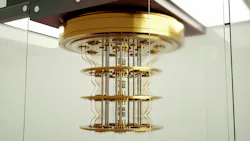
At milliKelvin temperatures, even minuscule amounts of energy can have outsized consequences. Inside a dilution refrigerator, every interconnect, every switch, and every signal path affect the thermal and electrical behavior of the system. At that point, the dilution refrigerator is no longer just a cooling vessel. It becomes a signal-dense control environment, and that completely changes the engineering issue.
That’s why infrastructure matters so much. The industry has done a great job advancing cryogenic platforms, but as systems become denser, the burden of signal routing inside those environments becomes far more consequential.
Wiring density, thermal load, and the classical interface to the processor are now major scaling bottlenecks when you’re working with the restrictions of a dilution refrigerator that has limited milliKelvin temperature space and cooling power. In practical terms, you’re not just trying to add more qubits. You’re trying to add more qubits without creating a related systems problem that you cannot afford to manage.
In this context, it’s important to recognize a fundamental limitation in current cryogenic control approaches: While cryogenic CMOS switches and multiplexers have been demonstrated for milliKelvin operation, their power dissipation is still too high for 1,000-qubit arrays and therefore becomes orders of magnitude too high for million-qubit-scale systems (Fig. 1). This makes thermal budget, not qubit fabrication, the central limiting factor in practical, scalable quantum computing.
If wiring density and thermal load are the bottlenecks, what truly changes the scaling equation?
At a certain point, you simply cannot keep scaling by adding more dedicated lines. The cryostat does not care how elegant your qubit design is — every additional cable brings heat, mass, and complexity with it. That’s when the conversation must shift from brute-force wiring to switching and multiplexing.
Switching is what allows you to decouple qubit count from physical I/O count. Instead of a one-to-one relationship between qubits and control lines, you start thinking in terms of shared resources, dynamic routing, and reconfigurable signal paths. That’s the only credible way to scale control and readout density without overwhelming the cryogenic environment.
What’s important is that this is not an abstract idea. Engineers already understand that multiplexing is essential. The real challenge has been finding switching technologies that do not introduce new problems, especially in a quantum system where thermal stability and signal integrity are non-negotiable.
If switching is so important, why has it been so difficult to use inside quantum systems?
Because most traditional switching technologies carry penalties that quantum engineers simply do not want to accept. Electromechanical/coaxial relays, in particular, are something many engineers actively try to avoid in a quantum environment.
They are bulky, mechanically complex, slow, and often require power to actuate. More importantly, they can inject vibration, electromagnetic noise, or heat into the system. In a milliKelvin environment, those effects are not minor annoyances; they can disrupt calibration, force thermal re-stabilization, and reduce usable system time.
As a result, while switching and multiplexing are clearly the right architectural direction, the industry has been stuck with a difficult tradeoff. Engineers know they need switching to solve the I/O scaling problem, but they also know that the existing switch technologies were never designed for this environment. What we hear consistently from system architects is that switching itself is no longer optional. That shift is now reshaping how quantum systems are being designed.
When does switching stop being a component decision and become an architectural one?
Very quickly. In a dense cryogenic system, switching determines much more than path selection. It affects heat generation, repeatability, calibration cycles, packaging density, and ultimately how much useful system time you actually get. That’s the point where it stops being a component choice and starts shaping the architecture.
Traditional electromechanical relays can offer strong isolation, but they also bring bulk, mechanical complexity, and power penalties. Semiconductor switching can offer integration benefits, but in RF and microwave environments it may introduce leakage, distortion, and linearity tradeoffs. At small scale, you can sometimes engineer around those compromises. At system scale, you end up architecting around them, and that gets very expensive very quickly.
So where does Menlo Micro sit in that equation?
Our view is direct. Switching should remove constraints, not introduce new ones. Menlo Micro’s MEMS-based Ideal Switch architecture is designed to combine the characteristics engineers are usually forced to trade off. Very high isolation when off, very low loss when on, strong linearity, broad bandwidth, and extremely low steady-state power dissipation.
In cryogenic quantum systems, those characteristics matter at the system level. A switch enables multiplexing, which directly addresses the I/O bottleneck by allowing multiple qubits to share control and readout infrastructure instead of scaling each channel linearly. That reduces cabling, room-temperature electronics, and thermal load inside the cryostat.
What matters at milliKelvin temperatures is heat. Mechanical switches inherently dissipate energy through actuation and thermal pathways, and CMOS-based approaches have significant difficulty managing noise and interference. By contrast, the MEMS switch has steady-state power dissipation of 0.2 µW/channel at cryogenic temperatures, meaning it does not introduce a meaningful heat load into the cold stage (Fig. 2).
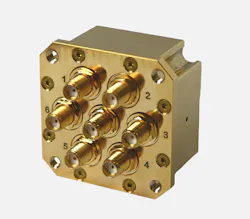
That combination, no meaningful heat dissipation and very small form factor, makes it possible to bring switching closer to the qubit plane and operate at much higher routing density without consuming limited cryogenic space or destabilizing the system.
Taken together, this enables a switching architecture that supports true multiplexing at milliKelvin temperatures, which is a fundamental requirement for scaling quantum systems beyond today’s I/O constraints. What makes that commercially significant is that quantum is one of the most extreme validation environments in electronics. If this works here, it translates across RF, aerospace, defense, and other high-reliability systems.
How should investors think about the shift from qubits to infrastructure?
The important point is that infrastructure exposure can cut across multiple quantum modalities and adjacent markets. We still don’t know who the eventual platform winners in quantum computing will be, which makes concentrated bets on any single modality inherently riskier.
But scalable control, interconnect density, thermal management, and precision signal routing are needs that consistently show up across superconducting systems, trapped-ion ecosystems, quantum sensing, cryogenic test environments, and even aerospace and defense.
That’s why I think sophisticated investors should be looking at the entire quantum infrastructure ecosystem, not just the quantum-computing market. Processor companies are one layer. The companies enabling cryogenic environments, high-density interconnects, control electronics, switching, and packaging are another. As the industry matures, some of the most durable value may sit in those enabling layers because they can participate across multiple winners rather than be dependent on just one.
Does that make quantum, fundamentally, a full-stack systems business?
Absolutely. The winners will not just be companies with elegant qubit physics. They will be the companies that can orchestrate an entire system, i.e., quantum devices, control electronics, cryogenics, packaging, signal routing, calibration, and software. We’re already moving in that direction because performance at scale is increasingly determined by how those subsystems work together, not by any one layer in isolation.
For Menlo Micro, that’s strategically significant. Quantum is one of the most demanding validation environments imaginable. If a switching platform can perform there, it creates credibility not just in quantum, but across high-performance RF, advanced instrumentation, aerospace, defense, and other reliability-critical markets. In commercial terms, that broadens the relevance of the technology well beyond a single vertical.
Over the next few years, what will define leadership in scalable quantum systems?
Leadership will come from turning fragile experimental systems into robust operational platforms. Higher qubit counts matter, certainly, but so do control density, thermal discipline, calibration speed, and architectures that scale without a proportional increase in complexity. In other words, the leaders will be the companies that industrialize quantum, not just demo it once at a trade show.
From that perspective, infrastructure is not a secondary concern. It’s utterly foundational. The industry is quickly learning that every additional qubit also creates another requirement for routing, control, calibration, and stability. If those layers do not scale cleanly, the promise of quantum performance will stay trapped in the lab.
About the Author
 David Maliniak
David Maliniak
Executive Editor, Microwaves & RF
I am Executive Editor of Microwaves & RF, an all-digital publication that broadly covers all aspects of wireless communications. More particularly, we're keeping a close eye on technologies in the consumer-oriented 5G, 6G, IoT, M2M, and V2X markets, in which much of the wireless market's growth will occur in this decade and beyond. I work with a great team of editors to provide engineers, developers, and technical managers with interesting and useful articles and videos on a regular basis. Check out our free newsletters to see the latest content.
You can send press releases for new products for possible coverage on the website. I am also interested in receiving contributed articles for publishing on our website. Use our contributor's packet, in which you'll find an article template and lots more useful information on how to properly prepare content for us, and send to me along with a signed release form.
About me:
In his long career in the B2B electronics-industry media, David Maliniak has held editorial roles as both generalist and specialist. As Components Editor and, later, as Editor in Chief of EE Product News, David gained breadth of experience in covering the industry at large. In serving as EDA/Test and Measurement Technology Editor at Electronic Design, he developed deep insight into those complex areas of technology. Most recently, David worked in technical marketing communications at Teledyne LeCroy, leaving to rejoin the EOEM B2B publishing world in January 2020. David earned a B.A. in journalism at New York University.
Rich Simoncic
CEO, Menlo Microsystems
Richard "Rich" Simoncic is Chief Executive Officer of Menlo Microsystems, where he leads the company's next phase of growth and commercialization as it expands the adoption of its groundbreaking switching technology across a range of markets including AI infrastructure.
A seasoned semiconductor industry executive, Rich brings more than 35 years of leadership experience spanning operations, product strategy, mergers and acquisitions, and technology innovation.
Prior to joining Menlo Microsystems, Rich served as Chief Operating Officer of Microchip Technology, where he spent his entire career following the company's founding in 1989.
Related
 Leaders Logo
Leaders relevant to this article: