Eying Supply Chain, DoW Finances Alcoa’s Australian Gallium Production
In hopes of guarding against gallium material supply-chain issues, the U.S. Department of War (DoW) has secured an estimated $174 million in equity financing. This will help ensure a steady available flow of gallium as required for products using compounds such as gallium nitride (GaN) and gallium arsenide (GaAs).
The financing was executed by the Office of the Assistant Secretary of War for Industrial Base Policy (OASW (IBP)) via the Industrial Base Analysis and Sustainment (IBAS) program. It's been arranged with a multinational partnership consisting of Export Finance Australia (EFA), the Government of Japan, and Sojitz Corp., and will support Alcoa of Australia and its Wagerup alumina refinery. Expectations are 100 metric tons of gallium metal to be produced per year.
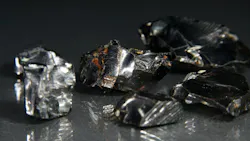
Gallium (see image above) is part of RF/microwave and optical semiconductors used throughout military electronic systems, including for communications and radars. It also enables solar cells and missile guidance systems. Thus, a continuous supply of the material is critical to the continued production of these electronic systems for aviation, maritime, and terrestrial applications.
Since it began in 2014, IBAS has invested over $2.6 billion across more than 200 projects to restore and strengthen the defense industrial base.
The Honorable Michael Cadenazzi, Assistant Secretary of War for Industrial Base Policy, explained the significance of the financing. “This landmark agreement with our key allies, Australia and Japan, will secure a vital supply of gallium for our defense industrial base, strengthening our collective security and economic resilience for years to come.”
Learn more about wide-bandgap semiconductors



About the Author
Jack Browne
Technical Contributor
Jack Browne, Technical Contributor, has worked in technical publishing for over 30 years. He managed the content and production of three technical journals while at the American Institute of Physics, including Medical Physics and the Journal of Vacuum Science & Technology. He has been a Publisher and Editor for Penton Media, started the firm’s Wireless Symposium & Exhibition trade show in 1993, and currently serves as Technical Contributor for that company's Microwaves & RF magazine. Browne, who holds a BS in Mathematics from City College of New York and BA degrees in English and Philosophy from Fordham University, is a member of the IEEE.