Australian Gunners Focus with Thermal Weapon Sights
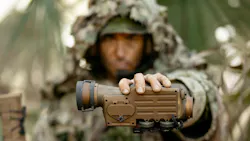
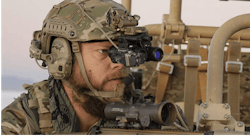
Snipers and special forces members of the Australian Army can now employ thermal weapon sights for higher accuracy. Using Improved Night/Day Observation Device (INOD) Block III thermal weapon sights from Leonardo DRS, Inc., provided under the LAND 159 Tranche program, military users can employ these clip-on thermal weapons to focus on targets in low-light and degraded visual conditions. The sights are mounted in front of existing direct-view optics components and are capable of as much as 25× improvement in target magnification (see figure).
Jerry Hathaway, senior vice-president and general manager of Leonardo DRS Electro-Optical and Infrared Systems business unit, noted: “Completing delivery and training for the Australian Army is an important milestone for our team.” Hathaway explained that the additional training helped attain optimum benefits from the sights: “The INOD Block III provides a thermal sighting capability intended to support sniper operations in demanding conditions, and the training helps ensure personnel are prepared to operate and maintain the system.”
The infrared (IR) sights are powered by lithium batteries with hot-swap change capability to enable continuous operation in the field. They can also operate from external power sources. The sights feature a 640 × 480 focal plane array to generate thermal imagery, with remote control and a rear-facing knob providing adjustment of focus. The prime contractor for the LAND 159 Tranche 1 program is Australian defense company NIOA.
Learn more about vision enhancement technologies
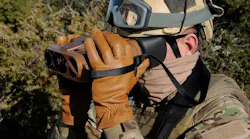
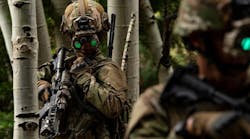 l3harris1
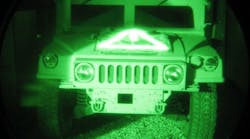 Night vision view
 dejan231_promo
About the Author
Jack Browne
Technical Contributor
Jack Browne, Technical Contributor, has worked in technical publishing for over 30 years. He managed the content and production of three technical journals while at the American Institute of Physics, including Medical Physics and the Journal of Vacuum Science & Technology. He has been a Publisher and Editor for Penton Media, started the firm’s Wireless Symposium & Exhibition trade show in 1993, and currently serves as Technical Contributor for that company's Microwaves & RF magazine. Browne, who holds a BS in Mathematics from City College of New York and BA degrees in English and Philosophy from Fordham University, is a member of the IEEE.