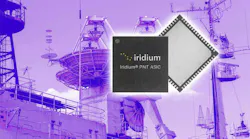
Most networks work where it’s easy. Ours works where it isn’t. Only Iridium delivers truly global voice, data and PNT services that keep people, vehicles, and critical systems safe and connected anywhere on Earth.
1676 International Drive Suite 1100 McLean, VA 22102 United States of America
The satellites of the Iridium network cover the entire earth with connectivity unmatched by any other communications provider. The first Iridium satellite was deployed in 1997 and the network was fully operational in 1998. In 2019, Iridium completed an upgrade to the Iridium constellation, replacing all satellites without ever disrupting service.
Most other networks use geostationary orbit (GEO) at about 35,000 kilometers (22,000 miles) from the planet. The Iridium constellation is in Low-Earth Orbit (LEO), approximately 780 kilometers (485 miles) above the Earth, providing stronger signals and faster connections through smaller antennas with lower power requirements.
Additionally, the unique structure of Iridium’s Low-Earth Orbit allows satellites to converge at the poles, ensuring coverage in the remote high-latitude regions where no other satellite provider has coverage. Iridium’s LEO network uses L-band frequencies to communicate with the users. These frequencies are more resilient to weather than the frequencies used by most GEO networks, providing reliable communications even in adverse conditions in the air, on the sea, or on the ground. Together, the satellites create a global mesh of coverage.
Now commercially available, the ultra-compact chip delivers trusted positioning, navigation, and timing resilience amid rising spoofing and jamming threats.