Integrated Toolchain Merges Compile, Debug, and Test Capabilities
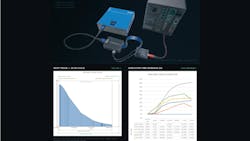
Intended to optimize multicore SoCs in safety- and security-critical applications, TASKING's enhanced unified toolchain offers greater in-depth timing analysis of real-time, multicore embedded systems. The solution integrates compiler technology, BlueBox debuggers, winIDEA IDE, and the LDRA tool suite to more accurately assess complex timing issues such as worst-case execution time (WCET).
The toolchain accelerates and simplifies complex timing-coupling analysis, helping OEMs reduce the risks and costs associated with certifying mission-critical multicore systems for aerospace, automotive, industrial, and robotics applications.
The execution time of critical real-time tasks in embedded systems can be affected by data and control coupling when other tasks running on the same processor need to access shared data or hardware resources. The internal complexity of multicore SoCs further complicates this, introducing hidden timing interference that can be difficult to assess accurately.
Independent tasks running on different cores may contend for shared cache resources, significantly impacting execution time and system determinism. The integrated toolchain accurately assesses worst-case timing interference and accelerates the process through AI-assisted automation.
TASKING’s full compile, debug, and test pipeline optimizes compiler, iC7pro BlueBox hardware trace, and LDRA's TBwcet and TBexec. On-target WCET measurements capture cross-core cache interference that can inflate worst-case execution times by up to 40%, providing the hard timing bounds and whole-application coverage evidence required for ISO 26262 and DO-178C certification.
Thanks to its integration of compile, debug, and test capabilities, the toolchain can identify complex multicore timing coupling, provide analysis to guide the mitigation or elimination of timing issues, and assure deterministic behavior and performance of multicore applications.
The toolchain enhances the entire development lifecycle for safety- and security-critical applications that must comply with standards such as DO-178C, A(M)C 20-193 and DO-356A (aerospace); ISO 26262 and ISO/SAE 21434 (automotive); IEC 61508 and IEC 62443 (industrial); and ISO 10218 and ISO/TS 15066 (robotics).
It helps developers observe and mitigate, or even eliminate, timing coupling across tasks running on different cores. Analysis can be repeated to ensure mitigations are working correctly and timing constraints are met to ensure deterministic system behavior.
TASKING also provides MCP servers and AI capabilities to enable AI-agentic workflows.
Related links:
More New Products
 dreamstime_carloscaetano_31188634_promo
About the Author
 Alix Paultre
Alix Paultre
Editor-at-Large, Microwaves & RF
Alix is Editor-at-Large for Microwaves & RF.
An Army veteran, Alix Paultre was a signals intelligence soldier on the East/West German border in the early ‘80s, and eventually wound up helping launch and run a publication on consumer electronics for the U.S. military stationed in Europe. Alix first began in this industry in 1998 at Electronic Products magazine, and since then has worked for a variety of publications, most recently as Editor-in-Chief of Power Systems Design.
Alix currently lives in Wiesbaden, Germany.