2026 Technology Forecast: 5G Standalone Finally Delivers the Goods
What you'll learn:
- Network operators are moving to cloud-designed cores with 5G-Advanced capabilities.
- Industrial and consumer applications are already finding new revenue opportunities.
- 5G-Advanced is poised to explode as 3GPP Releases 18 and 19 are frozen.

We’ve heard the promises for years. The telecommunications industry said 5G would change how the world works. They told us factories would become highly automated, and cities would manage their own traffic. While our phones deliver immersive experiences, that deep industrial shift has felt far away.
It all changes in 2026. The prediction is simple: 5G Standalone (5G SA) with incremental additions of 5G-Advanced capabilities will become the default way to power the next wave of services that make money. This isn’t just a small update. It’s the moment the network stops leaning on older 4G gear and starts working the way it was intended.
The Move to a True 5G Cloud-Architected Core
To see why 2026 is different, look at how networks are built. Until now, many operators have used Non-Standalone architectures. They installed 5G radios but kept the 4G core to handle traffic. It was a half-step. It offered speed, but it could not handle the complex demands of industry.
5G SA changes the foundation. It uses a service-based, cloud-architected core that lets operators deliver services with greater control and automation. By 2026, most big operators will have moved to these standalone cores.
This matters because a cloud-architected network lets carriers do more than just sell connections. It’s the block they need to build the specific services that were promised for so long. The network becomes a platform they can program.
New Revenue in Logistics, Consumer, and Transportation
We don’t have to guess what this looks like. We can already see what works for the leaders in the field. They’re finding ways to improve their business models right now (see figure).
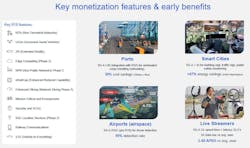
Consider, for instance, the logistics industry. At a major port in China, operators use 5G-Advanced tools combined with automated vehicles to move cargo. The results are real. They see 30% cost savings. Even better, they cut the time to unload cargo from four hours to 15 minutes.
Consumer markets are shifting, too. Think about the people who stream live video online. These creators use 5X as much data as the average person. They need fast upload speeds just as much as download speeds. Operators now sell packages with specific upload tiers and latency guarantees to these users. This strategy lifts the average revenue per user 3X to 4X.
Even airports are using the network in new ways. They employ 5G-Advanced radio sensing capabilities to find drones near the runway. These systems have a 99% detection rate.
These aren’t tests. They’re real situations in today’s world, and they need the flexibility of SA cores to work.
Setting the Stage for 5G-Advanced
The move to 5G SA also lays the ground for 5G-Advanced. With the specifications for 3GPP Release 18 frozen, and Release 19 about to be frozen, we can see what’s possible. Release 18 makes 5G networks more responsive, efficient, and relevant to industries.
Three specific areas will likely take priority in 2026:
1. Simpler IoT devices (eRedCap)
You may know about RedCap, or "Reduced Capability." The next step is enhanced RedCap (eRedCap). It supports IoT devices that need less bandwidth and power. Think of parking meters, industrial sensors, or wearables that need to run for years without a battery charge. This tech is key for logistics and automated cities. First movers are looking to launch this late this year, with mass scaling expected over the next 24 months.
2. Connections from space (non-terrestrial networks, or NTNs)
The network is going to the sky. 5G-Advanced brings tighter ties with satellites. This is big for keeping coverage in remote areas and for tracking shipments. While fully compliant satellite networks are still in their early stages, momentum is strong for services that switch between ground towers and satellites.
3. Better railways
Trains are ditching their old Global System for Mobile Communications – Railway (GSM-R) systems for a new future-proof setup called Future Railway Mobile Communication System (FRMCS). 5G-Advanced significantly improves rail communications. It offers reliable connections for trackside networks and high-speed mobility. Trials are starting now, with major changes targeted between 2030 and 2035.
Network Slicing Makes Sense with a Programmable SA Core
One of the biggest business shifts comes from network slicing. This idea makes more sense with a programmable SA core. It allows operators to create virtual networks that fit exact needs.
A port authority can expect certain performance levels for its logistics apps. Outside broadcasters can receive pop-up time and location-based slices for sports events, parades, and news events. A utility company can get a dedicated and highly resilient connection for its power grid. Every customer gets exactly what they need without hurting other services on the network.
The Race to Implement 5G SA is On
The money makes sense, too. Moving to a new core costs money upfront, but the benefits add up fast. Automated management brings efficiency and new ways to make money.
Operators are always looking for new abilities, and 2026 will bring plenty. We estimate that 86 operators around the world have already launched 5G SA. Another 20 to 40 more plan to upgrade in 2026.
The question is not whether this change will happen, because it’s already in motion. The question is which telecom company will take the lead. The early leaders that have their SA offerings ready are putting themselves ahead. They’re getting the business that their competitors can’t even handle.
We spent years talking about what 5G could do. In 2026, thanks to the Standalone core, we will stop talking about the future and start working with the results.
About the Author
 Steve Douglas
Steve Douglas
Head of Market Strategy, Spirent Communications
Stephen Douglas is Head of Market Strategy for Spirent Communications, helping to define technical direction, new innovative solutions and market-leading disruptive technologies. With over 20 years’ experience in telecommunications, Stephen has been at the cutting edge of next generation technologies and has worked across the industry with service providers, start-ups, and network equipment and device manufacturers, helping drive innovation and transformation across the 5G ecosystem. Stephen is an ardent believer in connected technology and strives to challenge, blur and break down the silos that prevent innovation and business success.